OpenAI gives Novo Nordisk access to updated GPT-Rosalind life sciences model
The research preview adds Codex plugins, biological file viewers, and benchmarked gains across drug discovery, genomics, and wet lab tasks.
OpenAI has updated GPT-Rosalind and expanded research preview access for eligible life sciences organizations, including Novo Nordisk
OpenAI has expanded research preview access to GPT-Rosalind, naming Novo Nordisk as one of the organizations using the life sciences model to support medical research.
The updated GPT-Rosalind combines GPT-5.5’s coding and tool-use capabilities with stronger performance in drug discovery, genomics, quantitative biology, and wet lab troubleshooting. OpenAI says the model is now available to eligible organizations globally through its trusted-access deployment structure.
Eligible organizations must be conducting legitimate scientific research with clear public benefit, have governance and safety oversight, and use controlled access with enterprise-grade security. OpenAI is also offering a managed workspace for qualified organizations without an Enterprise account.
The update adds Life Sciences Research and Life Sciences NGS Analysis plugins in Codex, giving researchers a way to combine evidence retrieval, biological interpretation, and bioinformatics execution in the same workspace.
Novo Nordisk named in research preview expansion
Novo Nordisk is using GPT-Rosalind to help researchers analyze complex datasets, identify patterns, and test hypotheses more quickly.
The updated model is designed to help life sciences teams connect evidence across literature, genomics, transcriptomics, sequence, structure, and experimental results.
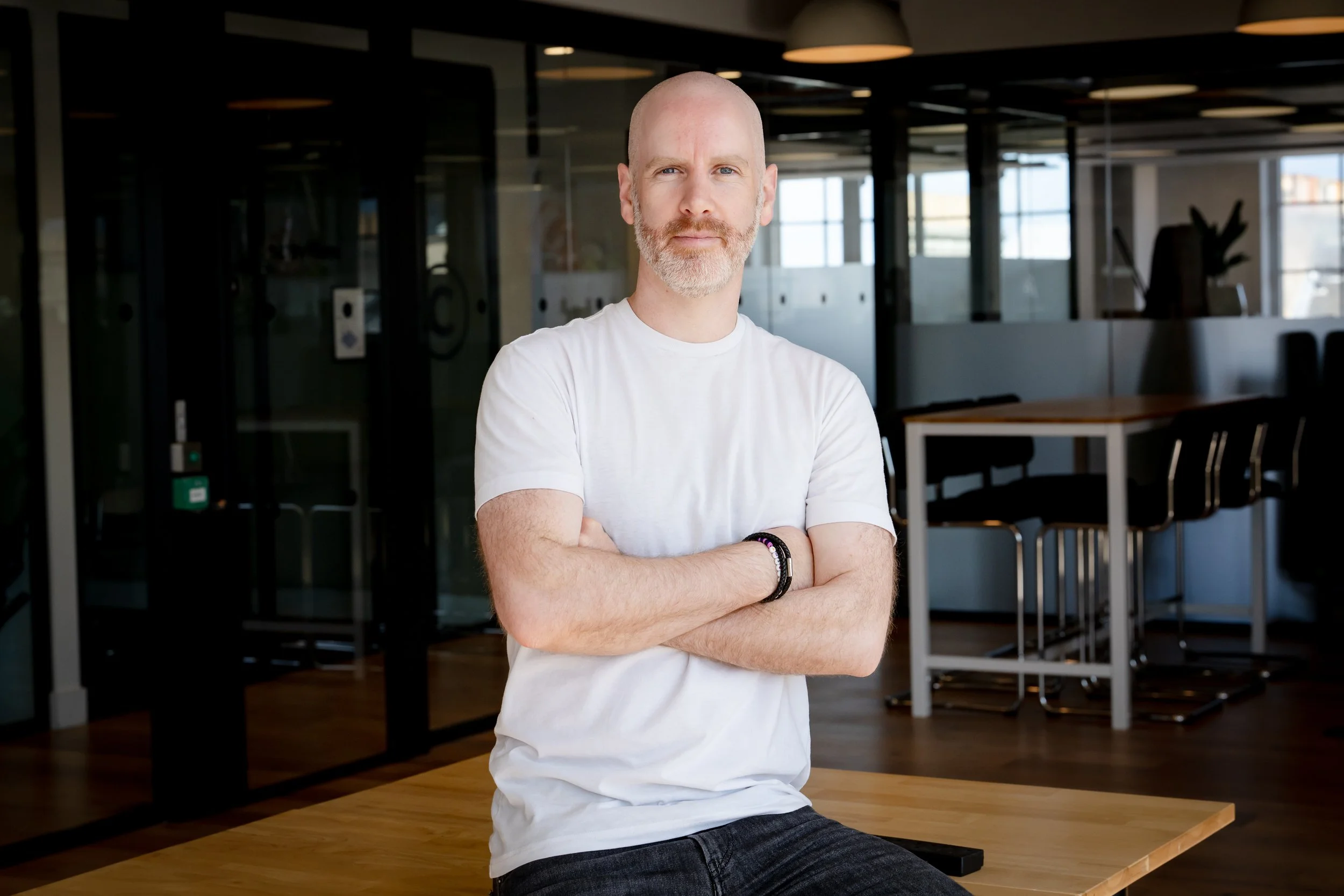
Mishal Patel, Group Vice President, AI & Digital Innovation, R&D at Novo Nordisk, says: "Life sciences research is complex, data-rich, and interdisciplinary. To deliver meaningful value for researchers, advanced AI models must be grounded in trusted scientific data, connected to validated tools, and integrated into the real-world workflows researchers use every day. We’re pleased with our partnership with OpenAI and the opportunity to explore how GPT-Rosalind can support more rigorous, practical approaches to drug discovery."
The Novo Nordisk example gives OpenAI a named enterprise research user as it opens GPT-Rosalind to more qualified organizations. The model remains in research preview and is not being made generally available.
Codex plugins add workflow execution
The Life Sciences Research and Life Sciences NGS Analysis plugins are designed to extend GPT-Rosalind from reasoning into repeatable scientific workflows. All users can now access both plugins through Codex. Qualified GPT-Rosalind enterprise users can also use GPT-Rosalind to power the plugins.
The Life Sciences Research plugin supports sourced evidence retrieval and biological interpretation. The Life Sciences NGS Analysis plugin supports bioinformatics workflows, including next-generation sequencing analysis.
OpenAI has also added interactive viewers for biologically native file types, including sequence, alignment, and structure viewers. The viewers allow scientists to inspect biological files while asking follow-up questions in context.
In one example, OpenAI describes a workflow in which a scientist investigates a liquid tumor biopsy using processed circulating tumor DNA records. The Life Sciences NGS Analysis plugin surfaces recurring alterations, low-frequency calls, and sample trajectories, before the Life Sciences Research plugin adds target, inhibitor, and resistance context around KRAS G12C.
OpenAI also lists workflows for single-cell RNA sequencing quality control and annotation, and bulk RNA sequencing FASTQ quality control. The company says the plugins preserve artifacts and provenance so outputs can be reviewed and revised.
OpenAI reports gains across life sciences benchmarks
OpenAI says it evaluated GPT-Rosalind using LifeSciBench, an externally expert-judged benchmark designed around six life sciences workflow areas: evidence handling, analysis, design and optimization, scientific reasoning, validation and operations, and translation and communication.
The company says GPT-Rosalind outperformed GPT-5.5 on LifeSciBench and showed gains on more specialized evaluations.
On MedChemBench, which tests medicinal chemistry tasks including structure-activity relationships, drug potency, toxicity, absorption, distribution, metabolism, excretion, lead optimization, and retrosynthesis, OpenAI says GPT-Rosalind scored 27.5 percent compared with 25.1 percent for GPT-5.5.
On GeneBench, which evaluates long-horizon genomics and quantitative biology tasks, OpenAI says GPT-Rosalind reached 21.6 percent accuracy compared with 20.4 percent for GPT-5.5, while using 31 percent fewer tokens.
OpenAI also introduced LabWorkBench to test support for real wet lab protocols. The company says GPT-Rosalind scored 63.2 percent, compared with 55.8 percent for GPT-5.5.
The updated GPT-Rosalind is available now in research preview through OpenAI’s trusted-access process. OpenAI says future work will focus on biological reasoning, tool-heavy research workflows, public health, preparedness, biodefense, drug discovery, and translational medicine.