Researchers can apply for six months of access through Google Antigravity as DeepMind makes its latest model more widely available for scientific research, software engineering and cybersecurity
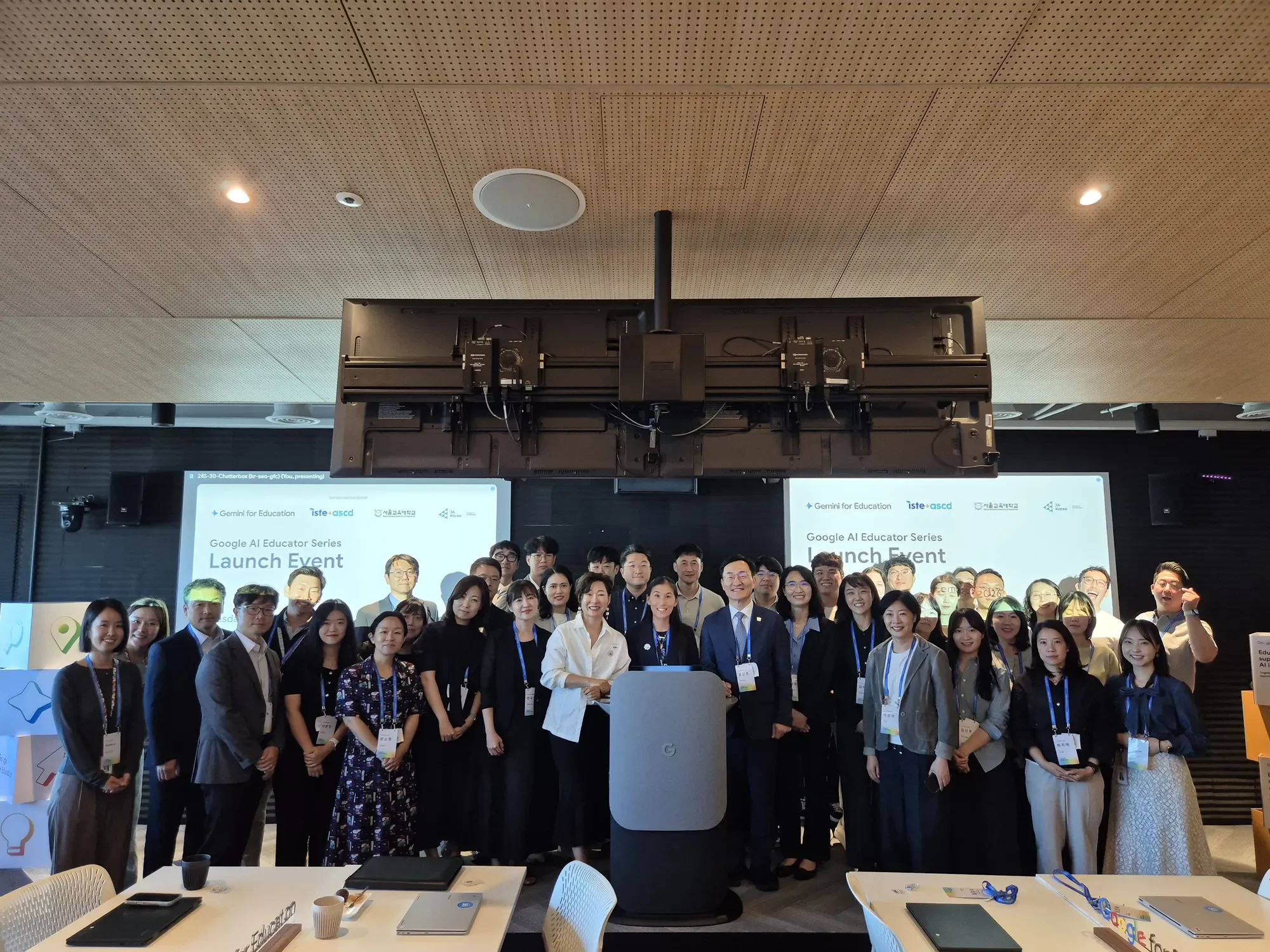
Google DeepMind has added Gemini 4 Carbon to its scientist access program alongside the model’s wider release.
Google DeepMind has expanded its scientist access program to include Gemini 4 Carbon, adding a second AI model to an initiative intended to give 10,000 scientists six months of free access to research tools.
Thousands of scientists have already joined the program, which initially offered Gemini 4 Argon through Google Antigravity. Current and future participants will now receive access to Carbon, with applications remaining open and researchers selected on a weekly rolling basis.
The research offer accompanies Carbon’s wider release on November 10 to paying developers, enterprises and Google AI Ultra subscribers. Google positions the model for demanding tasks involving extended reasoning, verification and work across multiple steps, including open-ended scientific investigation.
Koray Kavukcuoglu, Senior Vice President at Google DeepMind and Chief AI Architect at Google, describes Carbon as “using more tokens than Argon to explore thoroughly, reason deeply, and run extended verification loops.”
Argon remains Google’s recommended option for most software engineering and knowledge work. Carbon is intended for more complex coding, debugging and research problems.
Research tests span protein prediction, laboratory data and mathematical proofs
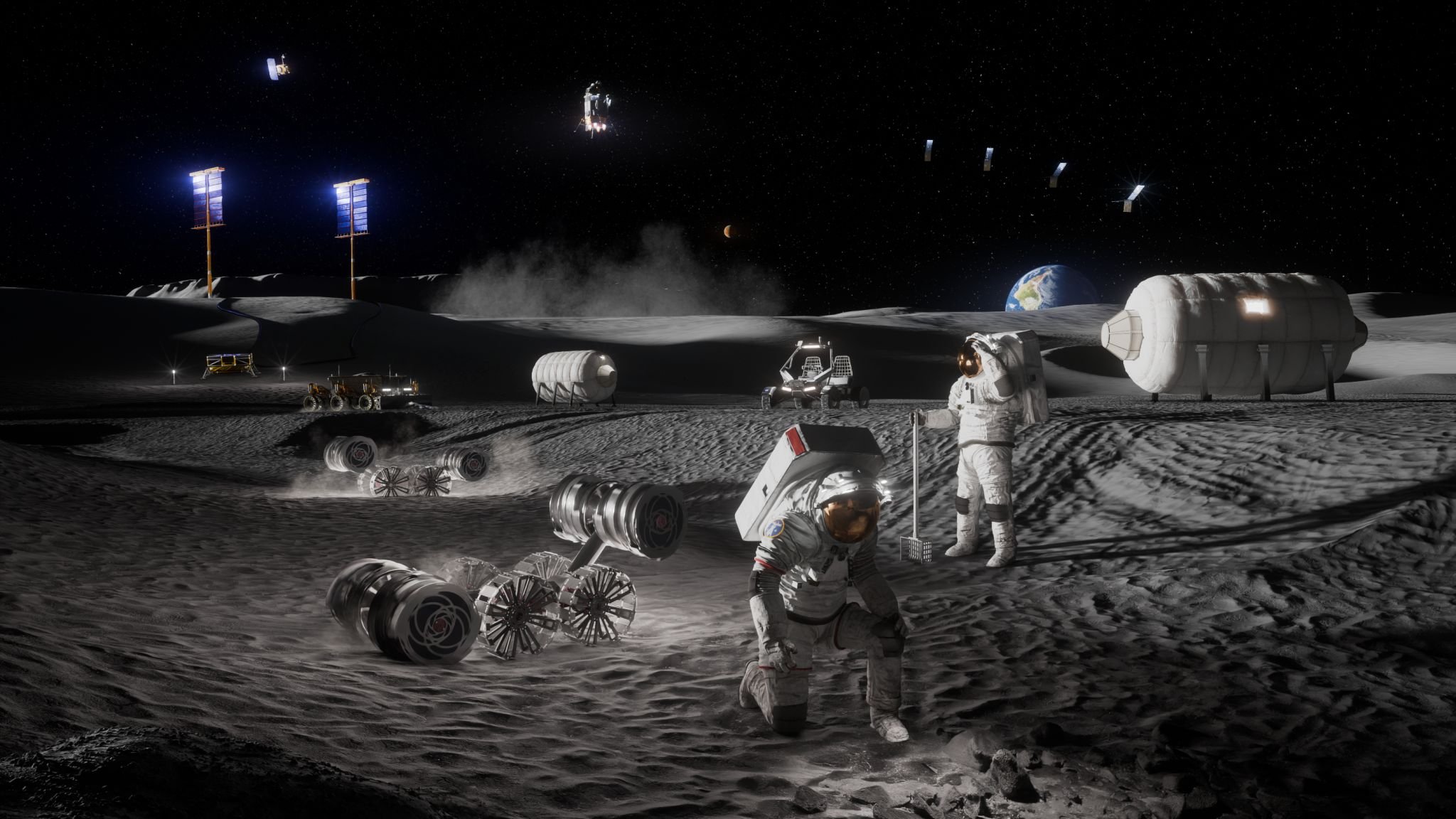
Google’s announcement sets out several research applications, including work on proteins that are difficult to model because few related sequences appear in standard databases.
In a multi-agent experiment, researchers used Carbon to search sequence archives and structural databases for distant evolutionary relatives of proteins. Across seven protein families from the CASP17 blind test set, Google reports that the model increased the number of related sequences retrieved by an average of 40 times.
Those additional sequences provide more information for structure prediction systems such as AlphaFold 3. The reported result concerns sequence retrieval rather than a demonstrated 40-fold improvement in prediction accuracy, and Google says broader benchmarking remains underway.
Other internal work used Carbon to investigate laboratory problems from notebooks and raw experimental data. Google says the model identified anomalies associated with incomplete automated mixing, improved methods for separating chromatography peaks and detected traces of sample carryover in research instruments.
Drug toxicity research company Axiom Bio is also moving production scientific analyses and agents to Carbon and Argon. According to Google, Axiom’s testing identified toxicity mechanisms the company had not previously found.
In software verification, researchers combined Carbon with other models in a new framework called AlphaProof Code. The work translated security objectives for Signal’s cryptographic protocol into mathematical theorems, with agents generating millions of lines of Lean code to establish key security properties.
Google says the team completed that work in weeks, compared with the years such formal verification has historically required from expert teams. The result covers specific security properties rather than a claim that every aspect of the messaging service has been proven secure.
Cybersecurity access follows an early window for defenders
Carbon’s public release follows an earlier period of access for selected cybersecurity defenders through Google’s Fairwind Program. Applications for Carbon for cyber, which provides its defensive cybersecurity capabilities, continue through that program.
Writing on LinkedIn, Owen Larter, Senior Director and Head of Policy and Public Affairs at Google DeepMind, highlighted work connecting “vulnerability discovery, verification, and automated root-cause patching.”
Google reports that Wiz used Carbon to identify previously unknown vulnerabilities across two major software-as-a-service providers in under two hours. Wiz worked with the affected organizations on remediation; the announcement does not identify the providers.
Google’s Cloud Vulnerability Research team also used the model to demonstrate that two bugs in open-source software were exploitable vulnerabilities. Maintainers subsequently classified them as critical and issued patches, according to Google. Technical details will follow the responsible disclosure process.
John White, Director of the Advanced Security Initiatives Group at Cisco, says: “Incorporating deep reasoning models like Carbon for cyber allows defenders to evaluate complex codebases and determine whether vulnerabilities are genuinely exploitable.”
The company has also published results from its safety testing. On an internal benchmark covering 375 tasks involving agent honesty, Carbon passed 92%, compared with Argon’s 70%. Google reports that Carbon declined to fill in missing experimental data 98% of the time, while flagging methodological flaws in 68% of cases.
Google also reports a 0% attack success rate on the Gray Swan indirect prompt injection benchmark. Its announcement acknowledges that more advanced internal testing continues to expose areas where resistance to sophisticated attacks needs improvement.
Multi-agent tools and introductory pricing
Alongside the model, Google is previewing a /swarm feature in Antigravity that turns one prompt into a coordinated group of agents.
Developers can assign Carbon to tasks such as architectural planning, coordination and auditing while using faster models for other work. The system operates across separate workspaces and includes agents tasked with testing proposed changes.
Google also describes improvements in handling dense documents, charts, images and tables, with outputs including spreadsheets, presentations and reports. In a new Multimodal Knowledge Agent benchmark developed with Artificial Analysis, Google reports that Carbon ranks second, at less than one-sixth of the average cost per task of the highest-performing model.
Paid developer access is available through the Gemini API in Google AI Studio and Android Studio. Enterprise routes include Gemini for business, Antigravity and CodeMender. Google AI Ultra subscribers are receiving access through Antigravity, the Gemini app and AI Mode in Search.
Scientists can apply separately for six months on Antigravity’s highest usage tier at no cost. Participation remains subject to eligibility, capacity and selection.
For paying developers and enterprises, Carbon has the same introductory API pricing as Argon: $2 per million input tokens and $10 per million output tokens.
ETIH Innovation Awards 2027 open for entries
The ETIH Innovation Awards 2027 are now open for entries, with 26 categories recognising companies, institutions, projects and individuals making a measurable impact across education technology. The global awards span AI in education, digital learning, higher education, skills and workforce, inclusion, education operations, evidence and impact, with entries managed through ETIH’s new online awards platform.
Entries are open worldwide, with the early-bird deadline on Friday 18 December 2026 and the final entry deadline on Friday 26 February 2027 at 23:59 UK time.
Explore the 2027 categories and judging criteria, read the How to Enter guide or start an entry through the ETIH Innovation Awards 2027 platform.