ChatGPT’s new College Planner will help teens track applications, deadlines and financial aid
OpenAI is preparing a US rollout for students in grades 10–12, alongside flashcards, note-scanning tools and support for college advisers
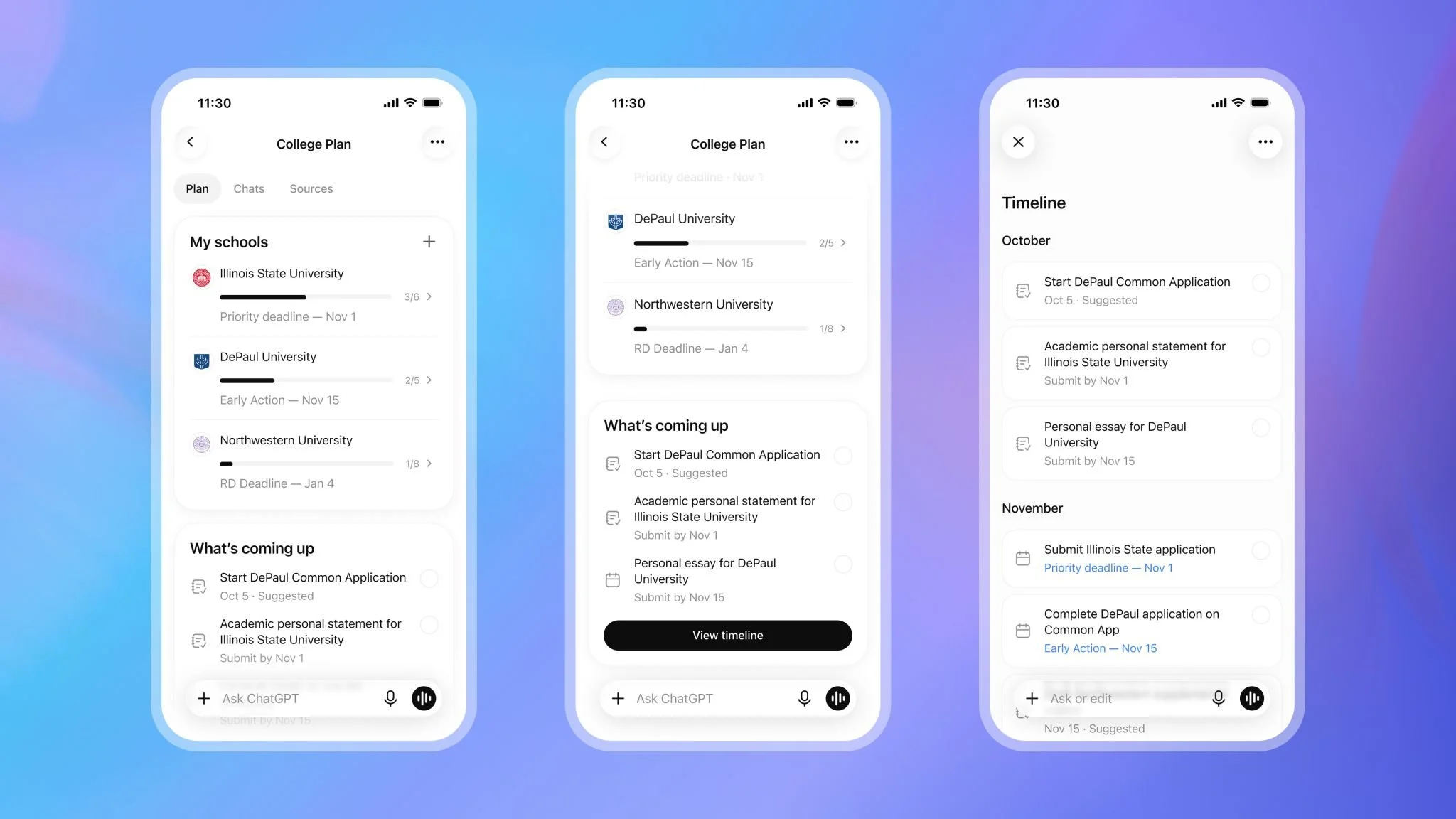
OpenAI plans to add College Planner to ChatGPT for Teens, bringing application requirements, deadlines and financial-aid tasks into a single plan for students applying to US four-year colleges.
Students will be able to track progress across their chosen institutions, see upcoming tasks on a timeline and ask ChatGPT to explain requirements. The tool will also offer help understanding financial aid, tracking aid deadlines and exploring scholarships and application fee waivers.
The initial experience is designed for US high-school students in grades 10–12. OpenAI describes it as coming soon, without specifying a release date. Support for other countries, two-year colleges, technical colleges and trade schools is planned for later.
The company says hundreds of thousands of US teens already use ChatGPT each week for college planning. It positions the new feature as help with organizing applications alongside guidance from counselors, advisers and families, while leaving decisions about where to apply with students.
Support for advisers as well as applicants
OpenAI is also supporting College Advising Corps, a nonprofit that places recent graduates as advisers in under-resourced high schools.
The contribution will help the organization expand into new states and establish an AI fellowship. Advisers across participating states will test and share ways to use AI to support students through college applications and enrollment. The announcement does not specify the funding amount or participating states.
“For students navigating the college application process, an unanswered question about a form, deadline, or fee can feel like a closed door,” says Ekaterina Struett, CEO of College Advising Corps.
“We see promise in College Planner as a tool that can help students prepare for those conversations, stay on track, and continue moving toward a college that is affordable and aligned with their goals.”
From handwritten notes to flashcards and quizzes
Separate study updates focus on turning students’ own materials into revision activities.
On iOS, students can now photograph multiple pages of notes in succession and combine them automatically into one PDF for upload to ChatGPT. OpenAI says it is working on Android support.
The company is also adding flashcards generated from uploaded notes or a chosen topic. Students can mark cards they know, return to missed answers and shuffle the deck. Sets are saved in their Library, and students can create a scheduled task to practice them.
Uploaded notes can also be turned into interactive quizzes directly in chat.
OpenAI reports that nearly 1.2 million teens used Learning Visualizations to explore math and science concepts in one week, while more than 180,000 used Study Mode for step-by-step support. Those figures describe use of the tools, rather than measured improvements in learning.
The company also says teens spend under 15 minutes a day on ChatGPT on average. In almost half of teen conversations where a break reminder appeared, users took a break or ended the conversation within five minutes. The figures do not establish that the reminder caused them to stop.
Students will help test tools and recommend changes
OpenAI has committed three years of support to Boston Children’s Hospital’s Digital Wellness Lab and its independent Student Advisory Council.
For the 2026–27 school year, the lab plans to bring together approximately 22 students across two groups. Around 12 students aged 14–18 will work on community digital well-being projects, while around ten aged 16–20 will focus on building AI chatbots and emerging technology.
Students will work with researchers and clinicians. Those in the AI group will test tools and recommend changes based on their use of AI in learning and their personal lives. OpenAI expects to seek feedback on teen safety defaults, parental controls, notifications and AI literacy.
ChatGPT for Teens is automatically applied to accounts identified as belonging to under-18s, with protections enabled by default. In its LinkedIn announcement, OpenAI stated: “We’ll continue evaluating the experience and improving it with feedback from teens, families and educators.”
College Planner remains a forthcoming feature. Multi-page note capture is available on iOS, with Android support still in development.